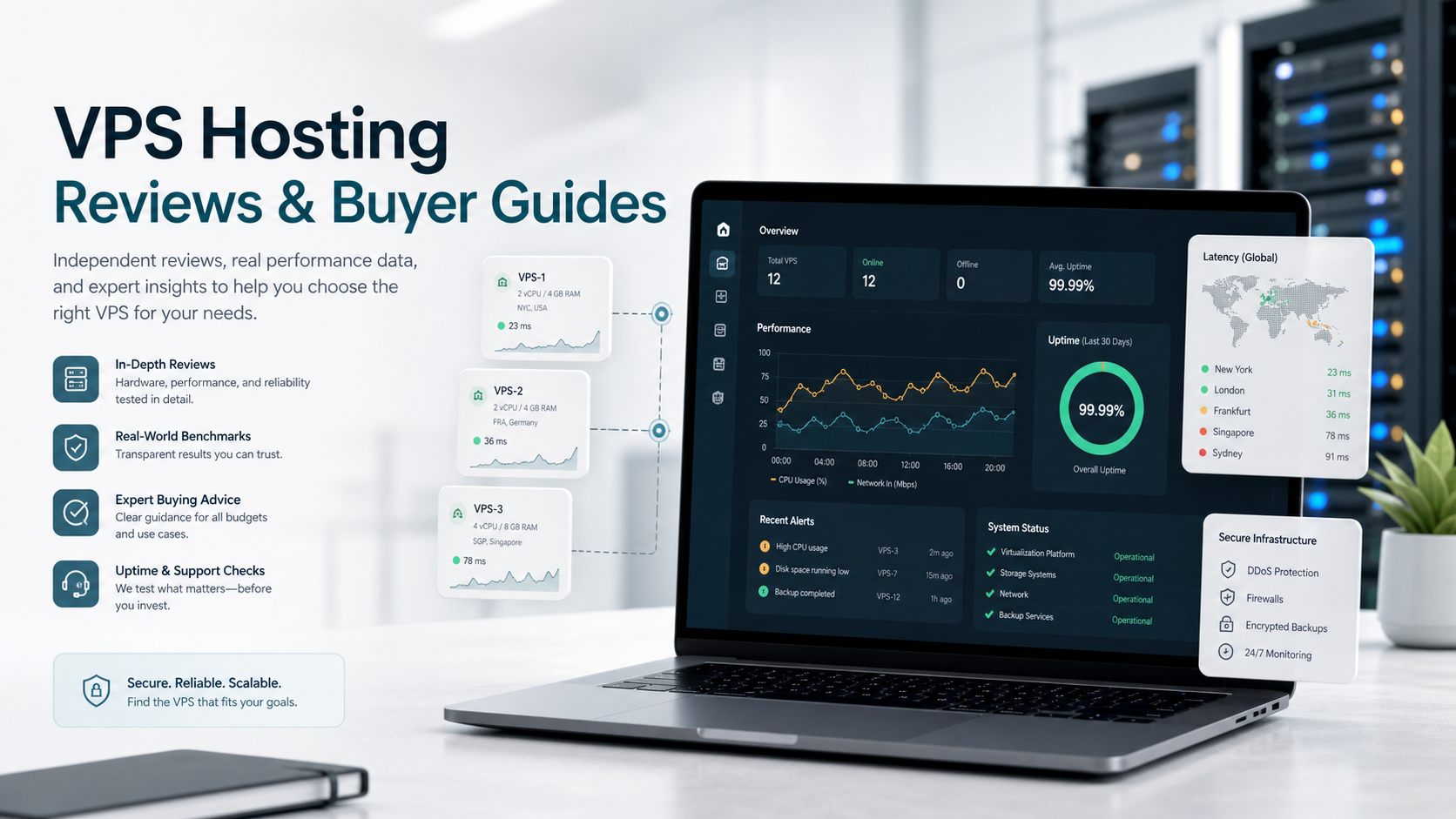
Inferno Hosting Review without marketing language. This page sets out the decision criteria, the common sizing mistakes, and the questions to put to support before purchase.
Review Snapshot
Who This Guide Is For
How We Evaluate VPS Hosting
Recommended Starting Checks
Why Inferno Hosting Is in Focus
Worldwide VPS Considerations
VPS Buyer Framework
The homepage is the main conversion page, but it also has to justify the project before any commercial click. A VPS buyer needs a clear method for turning plan tables into an actual decision. We use five checkpoints: workload fit, infrastructure clarity, support scope, safety controls, and commercial terms. Each checkpoint is intentionally practical because most VPS mistakes happen before the first login, when a buyer chooses the wrong plan or assumes the host will handle work that remains the customer's responsibility.
Inferno Hosting is evaluated here through that framework. The site does not claim official status, publish fake awards, or invent benchmark numbers. Instead, it gives readers a repeatable checklist they can use on the current offer page and on competing VPS plans.
Main Silo Map
The VPS Hosting Hub covers broad plan decisions such as Linux VPS, Windows VPS, NVMe storage, DDoS protection, latency, and managed versus unmanaged service. The Inferno Hosting Review Hub collects brand-focused pages such as pricing, plans, coupon checks, support, uptime, and refund policy. The setup silo covers practical tutorials for choosing, securing, backing up, and migrating a VPS.
This separation matters for SEO and for users. A buyer searching for a coupon is not in the same state of mind as a beginner trying to understand SSH access. A comparison reader needs different evidence than someone planning WordPress hosting. The site gives each query its own page so the content can match the intent instead of forcing every topic into one large review.
Trust And Editorial Limits
The project uses cautious editorial language because VPS hosting decisions can affect uptime, data loss, and operating cost. We do not promise a specific latency, ranking, revenue result, or support outcome. When a fact depends on the provider's current plan page, readers are told to verify it before purchase.
Affiliate links are present, but the content still needs to stand on its own. The review methodology, AI content policy, editorial policy, and disclosure pages explain how content is drafted and reviewed. The goal is to make the site useful even for a reader who does not click the tracker link.
How To Use The Calculator
The VPS headroom calculator is a lightweight planning tool. It does not replace application testing, but it helps beginners avoid buying a plan with no margin for package updates, logs, traffic spikes, database growth, or security tools. Treat the output as a starting point and then verify CPU, disk, bandwidth, and support details on the plan page.
For production work, always test the application after deployment. A staging check, backup restore test, and basic monitoring setup are more valuable than relying on a generic VPS recommendation.
Knowing When to Upgrade Inferno Hosting Review
Upgrade decisions for inferno hosting review should follow evidence: sustained memory pressure, CPU saturation during ordinary use, storage growth, database latency, swap activity, or backup windows stretching too long. A single spike is not a verdict; a repeated pattern usually is.
Check the upgrade mechanics before buying, not after. Knowing whether a resize is live or requires a rebuild is what lets you start modest and scale only when the workload earns it.
Editorial Takeaway on Inferno Hosting Review
The takeaway for inferno hosting review is unglamorous: buy the plan that matches the job you can describe, not the job you hope the server might absorb. The more precisely the workload is written down, the easier pricing, support, storage, and network fit become to judge.
Read this alongside the related hub, the setup guides, and the disclosure pages. Together they form a decision trail that is more durable than a single yes-or-no verdict.
Region and Latency Notes for Inferno Hosting Review
Location shapes the experience of inferno hosting review more than most buyers expect. Round-trip time is set by physical distance and routing, so a server near your audience usually beats a marginally faster CPU further away, especially for interactive applications and dashboards.
Check which regions are actually available on the plan you are considering, whether migration between regions is possible later, and whether any legal or data-residency requirement narrows the choice before performance does.
Documentation and Onboarding for Inferno Hosting Review
The quality of onboarding is an underrated factor in inferno hosting review. Look for documented reinstall steps, panel guides, DNS instructions, and a searchable knowledge base. These decide how quickly you recover from a mistake at 2am when support is queued.
A VPS buyer can sample this before paying: read two or three help articles and judge whether they answer a real question or restate the marketing page. That sample predicts the post-purchase experience reasonably well.
Acceptable Use and Restrictions for Inferno Hosting Review
Acceptable-use terms quietly decide whether inferno hosting review suits your project. Providers differ on background jobs, high-volume email, scraping, VPN or proxy use, streaming, and resource-intensive processes, and the restriction is often in the terms rather than on the plan page.
Read the policy before buying if the workload sits anywhere near those boundaries. Discovering a restriction after deployment is a migration, not an inconvenience.
Workload Fit for Inferno Hosting Review
Inferno Hosting Review is judged by the daily behaviour of the workload, not by a plan table. A general VPS workload may include a web server, database, scheduled tasks, monitoring, logs, security tooling, and occasional maintenance spikes. Estimate normal traffic, peak traffic, background tasks, database size, and log growth before comparing tiers. A server that looks inexpensive turns awkward once there is no headroom for updates, monitoring, or a short burst.
A sensible starting plan for inferno hosting review leaves spare RAM and CPU after the application is running. That margin is operating room for package upgrades, cache rebuilds, cron jobs, and security scans, and it is what turns a later resize into a data-backed decision instead of an emergency.
Technical Checks Before Buying Inferno Hosting Review
A VPS buyer should confirm that the operating system choice, panel access, reinstall path, DNS workflow, and documentation are clear before payment. Strong infrastructure still frustrates when routine tasks are buried in tickets or undocumented menus.
The blunt test for inferno hosting review is whether a buyer can go from payment to a working server without guessing. Plan pages that state what is included, what is optional, and where the customer takes over score well on that test.
What Counts As A Good VPS Review
A good VPS review should separate what can be verified from what can only be estimated. Verifiable items include plan names, operating system options, billing terms, visible support channels, published backup language, control panel information, and any documented restrictions. Estimated items include workload fit, beginner comfort, upgrade timing, and whether a plan has enough margin for a specific project.
This distinction is useful because hosting pages often mix technical facts with marketing language. The review approach on this site turns those claims into questions: what resource is included, what is optional, what is self-managed, what happens during growth, and what should a buyer document before launch?
Launch Checklist For Readers
Before a reader clicks through to a VPS plan, the minimum launch checklist is straightforward: choose a server region, decide Linux or Windows, estimate RAM and CPU headroom, confirm storage and bandwidth limits, prepare secure access, plan backups, and write down the cancellation or refund terms. That process takes a few minutes, but it prevents most early hosting mistakes.
After purchase, the first session should be treated as setup work, not production work. Update the system, configure access, confirm firewall behavior, deploy a test page or test process, verify monitoring, and run at least one backup or export. Only then should the VPS receive important traffic or data.
Inferno Hosting, Inferno VPS, Inferno Solutions: Same Search, Different Wording
Readers arrive here searching several variations of the same brand: Inferno Hosting, Inferno VPS, Inferno host, and Inferno Solutions. They are all describing the same buying decision, which is whether this provider's VPS plans fit a specific workload. The provider's client area runs on the inferno.name domain, which is worth noting because hosting brands are frequently confused with similarly named companies.
Because the naming varies, this site organises coverage by intent rather than by brand spelling. Whether the question is pricing, plan sizing, a coupon, uptime, support scope, server locations, or whether the company is legitimate, there is a dedicated page for it rather than one long review trying to answer everything at once.
Full Guide Index
Every page on this site, grouped by decision area. Use it as a directory if you already know what you are looking for.
VPS Hosting Guide: Plans, Specs and Buyer Checklists
Inferno Hosting Review: Pricing, Plans, Support and Uptime
VPS Use Cases: WordPress, Bots, Docker and Business Tools
VPS Setup Guides: Choose, Secure, Back Up and Migrate
VPS Hosting Comparisons and Inferno Hosting Alternatives
Trust and Policy
Why The Site Uses Long-Tail Pages
The long-tail structure exists because VPS buyers rarely ask one broad question. They ask whether a cheap VPS is enough, whether Linux or Windows is better, whether DDoS protection matters, whether a bot can run on a small plan, whether WordPress needs more RAM, and how Inferno Hosting compares with alternatives. Each question deserves its own page because the practical answer changes with the use case.
This is also why the site includes utility and policy pages. A review project that only contains commercial pages looks thin. A review project with methodology, disclosure, AI policy, setup guides, glossary content, and comparison criteria gives search visitors a clearer reason to trust the site and continue reading.
VPS Headroom Estimator
Estimate headroom before choosing a tier, so updates, logs, and short traffic spikes do not fill the server.
Next step: verify on the provider page
Take the requirement you wrote down and check it line by line against the current plan.
Check Current VPS PlansFAQ
Is this the official Inferno Hosting website?
No. This is an independent review and buyer-guide site.
What is the main topic of this site?
The main topic is VPS hosting, with Inferno Hosting used as the primary provider to evaluate.
Do you publish benchmarks?
We avoid fake benchmarks. When exact testing is unavailable, we use practical buyer criteria and state limitations clearly.
Can beginners use this guide?
Yes. The setup pages explain basic VPS concepts and decision points in plain English.
Where do the buttons lead?
Commercial buttons lead to the tracker link provided for this project.